Readers may be interested in a recent survey by Toronto-based advertising agency Bensimon-Byrne showing that age is a determining factor in how people buy into a company's green communications.
Whereas people under 30 are frequently perceived to be more sensitive to social and environmental issues, the survey and the report containing it seems to suggest that young people are significantly less likely to buy products or services based on a company's CSR performance...
Wednesday, September 8, 2010


Wednesday, June 30, 2010
La responsabilité sociale en six étapes
Il existe désormais un nouveau guide pour implanter la responsabilité sociale au sein des entreprises. Fort de son travail avec plusieurs des plus grandes compagnies au monde, la firme Deloitte vient de publier ce guide en collaboration avec le Pacte Mondial de Nations Unies afin de permettre aux entreprises, les petites comme les grandes, à gérer la durabilité sociale et environnementale.
Wednesday, May 26, 2010
Future directions for sustainability reporting
After ten years of sustained growth that made the Global Reporting Initiative (GRI) the world standard in sustainability reporting guidelines, the number of new companies reporting is falling off. As Mehrdad Nazari, an experience sustainability reporter points out in a recent blog, reporting may have hit a glass ceiling.
Saturday, May 8, 2010
Nouvelles innovations durables
Les aventures en recherche et en développement qui auparavant étaient considérées comme trop risquées sont désormais nombreuses. C'est notamment grâce à l'engouement pour les produits verts, éco-efficaces et responsables que les entreprises innovatrices investissent avec plus d'audace... Les deux exemples ci-bas démontrent à quel point le fruits de cette nouvelle confiance est sucré.
Sunday, April 25, 2010
Planes vs. Volcano: a taste of things to come?
As planes take to the air once again across Europe, many around the world are wondering out loud whether air travel is necessary, or indeed even disireable.
Mount Eyjafjallajeokull's eruption is a climate change disaster, releasing 150,000 tons of CO2 every day, with no signs of slowing down. Even more damaging however is European air travel, as seen in the diagram below courtesy of informationisbeautiful.net. Unfortunately "planes or volcano" is now a moot question. How can we avoid the global consequences of planes + volcano?
Mount Eyjafjallajeokull's eruption is a climate change disaster, releasing 150,000 tons of CO2 every day, with no signs of slowing down. Even more damaging however is European air travel, as seen in the diagram below courtesy of informationisbeautiful.net. Unfortunately "planes or volcano" is now a moot question. How can we avoid the global consequences of planes + volcano?
Tuesday, April 13, 2010
Métro gratuit pour le jour de la terre
Bon, j'exagère un peu, mais les réseaux de transport en commun de 11grandes municipalités québécoises offrent aux usagers d'inviter un ami à prendre le métro gratuitement le jour 22 avril prochain, le Jour de la Terre. Il s'agit d'une collaboration inédite non-seulement entre les réseaux de transport en commun, mais aussi pour leurs partenaires
Sunday, March 28, 2010
The risks of waiting for legislation: why Wal-Mart's green shift will affect you
 While Canadian companies such as Interface Flor continue to prove that going green can create a huge competitive advantage, the vast majority of companies are playing the waiting game. Perhaps inspired by the Harper government's “integrated” approach (widely regarded as a euphemism for wait-for-the-Americans-to-act-first), many see going green as an expense rather than an investment, and prefer to wait for the government to even the field.
 But what if a multinational business, say the world's biggest retailer, were to preempt legislation and create a domino effect? The wait-and-see companies would then be at a disadvantage compared to those that had acted before action became necessary.
Wednesday, March 10, 2010
Les citoyens se tournent davantage au « BMWs »
Trois semaines, trois annonces de taille pour l'environnement, et qui risquent d'influencer le climat des affaires. Troisième texte sur trois
Une première depuis 40 ans - les déplacement en automobile ont chuté, selon la dernière analyse origine-destination de l'agence métropolitaine de transport (AMT). La chute de 1% est due aux choix de Montréalais avertis, qui en 2008 sont de plus en plus nombreux à choisir la formule Bike, Metro, Walk (BMW).
Les faits en bref:
-La chute de 1% s'applique aussi à la Ville de Laval et à la Rive-Sud, alors que la population à augmenté de 5% entre 2003 et 2008. À Montréal toute seule, les déplacements en auto ont été réduits de 6%. La région se démarque
Une première depuis 40 ans - les déplacement en automobile ont chuté, selon la dernière analyse origine-destination de l'agence métropolitaine de transport (AMT). La chute de 1% est due aux choix de Montréalais avertis, qui en 2008 sont de plus en plus nombreux à choisir la formule Bike, Metro, Walk (BMW).
Les faits en bref:
-La chute de 1% s'applique aussi à la Ville de Laval et à la Rive-Sud, alors que la population à augmenté de 5% entre 2003 et 2008. À Montréal toute seule, les déplacements en auto ont été réduits de 6%. La région se démarque
Sunday, March 7, 2010
Greenwashing's latest victim: one massive“bamboo-zle.”
The last few weeks have brought an unusually large number of environmental announcements that appear set to change the way we do business in Canada, particularly Quebec. The text below is the second of three mini-analysis' of these changes, and what they may mean for you.
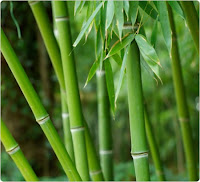 The U.S. Federal Trade Commission (FTC) and the Canadian Competition Bureau (CCB) recently accused companies of “bamboo-zling” consumers. Both are now accusing retailers of deliberately misleading consumers by labeling products as “made of bamboo fiber,” and forcing them to instead adopt the term “bamboo rayon.”
Yes, the raw material used to make bamboo fabric is indeed the fast-growing plant that requires little or no pesticides or fertilizers and is reputed to have natural anti-microbial properties. But the process to turn bamboo
 The U.S. Federal Trade Commission (FTC) and the Canadian Competition Bureau (CCB) recently accused companies of “bamboo-zling” consumers. Both are now accusing retailers of deliberately misleading consumers by labeling products as “made of bamboo fiber,” and forcing them to instead adopt the term “bamboo rayon.”
Yes, the raw material used to make bamboo fabric is indeed the fast-growing plant that requires little or no pesticides or fertilizers and is reputed to have natural anti-microbial properties. But the process to turn bamboo
Thursday, February 25, 2010
Trois percées pour l'environnement à Montréal
Trois semaines, trois annonces de taille pour l'environnement. Le portrait de la ville évolue alors que la place qu'elle réserve à l'environnement grandit à vue d'œil. Afin de mieux s'adapter aux changements qui s'annoncent, les organisations ont intérêt à en prendre note. Au cours des prochains jours ce blogue affichera trois mini-analyses des retombées de ces annonces pour les entreprises, ONG, OSBL et compagnie. Restez des nôtres.
 La première annonce, celle de cinq nouvelles installations pour traiter les résidus organiques à Montréal et en région, dont trois bioréacteurs qui produiront de l'électricité à partir du méthane dégagé par la décomposition, permettra d'augmenter sensiblement le compostage résidentiel et commercial.
Cinq nouvelles usines de traitement des résidus verts

Subscribe to:
Posts (Atom)


